
News Center
Graphite Valley Industrial Group




GMG leads graphene aluminum ion battery innovation
Release time:
Jul 25,2022
Australia's Graphene Manufacturing Group (GMG) announced that the trial production and testing plant for graphene aluminum-ion batteries has been put into operation, and button batteries, a potential competitor to lithium-ion batteries, have also been manufactured. Craig Nicol, Managing Director and CEO of GMG Group, said, "the commissioning of the battery pilot plant is an important milestone for GMG Group, which not only means that we can develop, manufacture and test our own G + Al button cells, but also promote the commercial development of G + Al batteries, cooperation with future customers, and further strengthen our expertise." The company does not mine graphite, but produces graphene by cracking methane. The company used a patented process to design a method to produce high-quality, low-cost, scalable, adjustable, non-polluting or low-polluting graphene. While the graphene produced by GMG can be used in multiple industries, the company's initial focus was on developing applications for energy saving and energy storage solutions, and its vision is now being realized through the pilot plant for the production of graphene-based aluminum-ion batteries. A potential competitor to lithium-ion batteries, this globally unique battery was developed by GMG Group, the University of Queensland Institute of Bioengineering and Nanotechnology and UniQuest companies and is now in production at scale. GMG Group's laboratory tests show that the G + Al battery energy storage technology has a higher energy density and higher power density than the current market-leading lithium-ion battery technology. The detailed technical parameters published by the company show that the power density of up to 7000 Wh/kg was confirmed by tests during 3000 cycles of experiments, including charging to full charge and discharging to almost complete loss of power at different charging rates. In addition, the test results show that the cycle rate during the test period is very high, and its charging rate is as high as 66 coulombs (ie, amps/s), and the performance degradation is negligible. In contrast, lithium-ion batteries have a charging rate of 600 to 100 cycles. Lower, performance is usually reduced to 60% of the original capacity. In the real world, this means that G + Al batteries have a longer lifespan and a shorter charging time. Professor Alan Rowan of the University of Queensland said, "Tests have shown that rechargeable graphene aluminum-ion batteries have a lifespan of three times that of current mainstream lithium-ion batteries, and the higher power density means that they can be charged 70 times faster. This battery can be charged multiple times without performance degradation, is easier to recycle, and reduces the possibility of harmful metals leaking into the environment." These parameters make graphene aluminum batteries a potential choice for electric vehicles and electronic devices, because battery life, charging time and durability are basically important factors to consider for all applications.
Australia's Graphene Manufacturing Group (GMG) announced that the trial production and testing plant for graphene aluminum-ion batteries has been put into operation, and button batteries, a potential competitor to lithium-ion batteries, have also been manufactured. Craig Nicol, Managing Director and CEO of GMG Group, said, "The commissioning of the battery pilot plant is an important milestone for GMG Group. This not only means that we can develop, manufacture and test our own G Al button batteries, but also promote the commercial development of G Al batteries, cooperation with future customers, and further strengthen our expertise." The company does not mine graphite, but produces graphene by cracking methane. The company used a patented process to design a method to produce high-quality, low-cost, scalable, adjustable, non-polluting or low-polluting graphene.
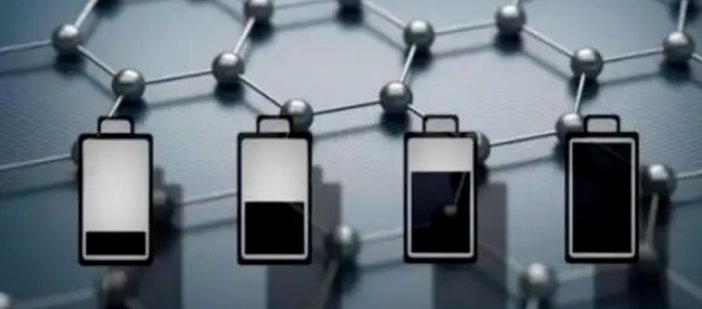
While the graphene produced by GMG can be used in multiple industries, the company's initial focus was on developing applications for energy saving and energy storage solutions, and its vision is now being realized through the pilot plant for the production of graphene-based aluminum-ion batteries.
A potential competitor to lithium-ion batteries, this globally unique battery was developed by GMG Group, the University of Queensland Institute of Bioengineering and Nanotechnology and UniQuest companies and is now in production at scale. GMG Group's laboratory tests show that the G + Al battery energy storage technology has a higher energy density and higher power density than the current market-leading lithium-ion battery technology. The detailed technical parameters published by the company show that the power density of up to 7000 Wh/kg was confirmed by tests during 3000 cycles of experiments, including charging to full charge and discharging to almost complete loss of power at different charging rates. In addition, the test results show that the cycle rate during the test period is very high, and its charging rate is as high as 66 coulombs (ie, amps/s), and the performance degradation is negligible. In contrast, lithium-ion batteries have a charging rate of 600 to 100 cycles. Lower, performance is usually reduced to 60% of the original capacity. In the real world, this means that G + Al batteries have a longer lifespan and a shorter charging time.

Professor Alan Rowan of the University of Queensland said, "Tests have shown that rechargeable graphene aluminum-ion batteries have a lifespan of three times that of current mainstream lithium-ion batteries, and the higher power density means that they can be charged 70 times faster. This battery can be charged multiple times without performance degradation, is easier to recycle, and reduces the possibility of harmful metals leaking into the environment." These parameters make graphene aluminum batteries a potential choice for electric vehicles and electronic devices, because battery life, charging time and durability are basically important factors to consider for all applications.
Related News
Contact Information
National Service Hotline:86-451-88118909
Address: 1299 Jubao 3rd Road, Songbei District, Harbin City
Telephone:86-451-88118909
WeChat Public Number

Copyright©2024 Graphite Valley Industrial Group | Business License